Mineral flotation is one of the most widely used methods for separating valuable minerals from ore. In copper, lead and zinc processing, the right combination of flotation reagents can help improve mineral recovery, concentrate quality and overall processing efficiency.
However, selecting flotation reagents is not simply a matter of choosing a chemical product. Ore mineralogy, particle size, water quality, pH, and the interaction between different reagents all influence flotation performance.
For mining companies and mineral processing plants, understanding the function of each reagent is an important step toward optimizing the flotation process.
1. What Are Flotation Reagents?
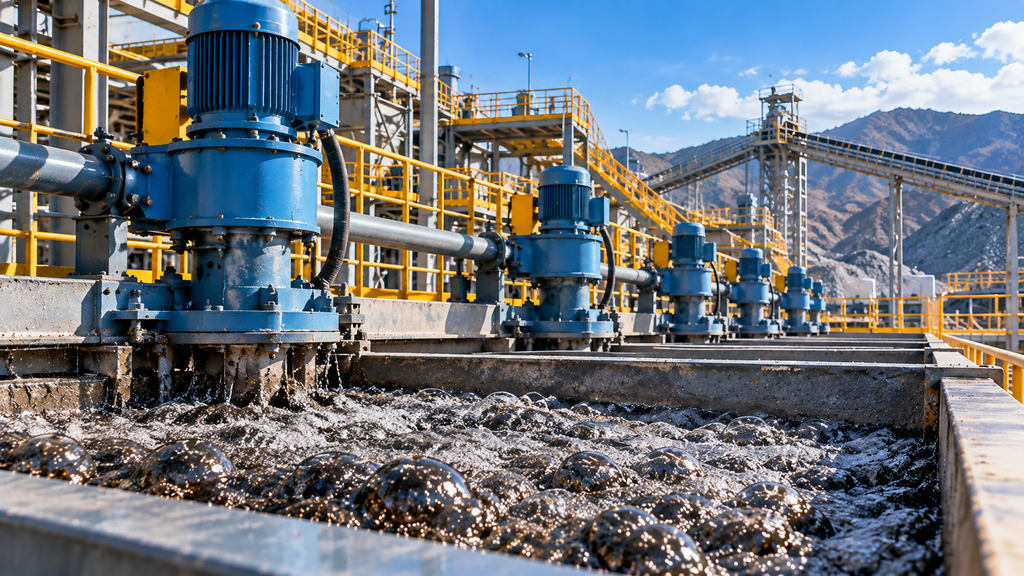
Flotation reagents are chemicals added during mineral processing to control the interactions between mineral particles, water and air bubbles.
They help selectively separate valuable minerals from unwanted gangue materials. Different reagents perform different functions, and several types are often used together in a flotation circuit.
The main categories include:
- Collectors: Improve the attachment of selected mineral particles to air bubbles.
- Frothers: Help generate and stabilize bubbles to support the flotation process.
- pH regulators: Adjust pulp acidity or alkalinity to influence mineral surface chemistry.
- Depressants: Reduce the flotation of unwanted minerals to improve separation selectivity.
- Activators: Promote the flotation response of specific minerals under suitable conditions.
The appropriate reagent combination depends on the ore composition and the separation objective.
2. How to Select Collectors for Copper, Lead and Zinc Ores
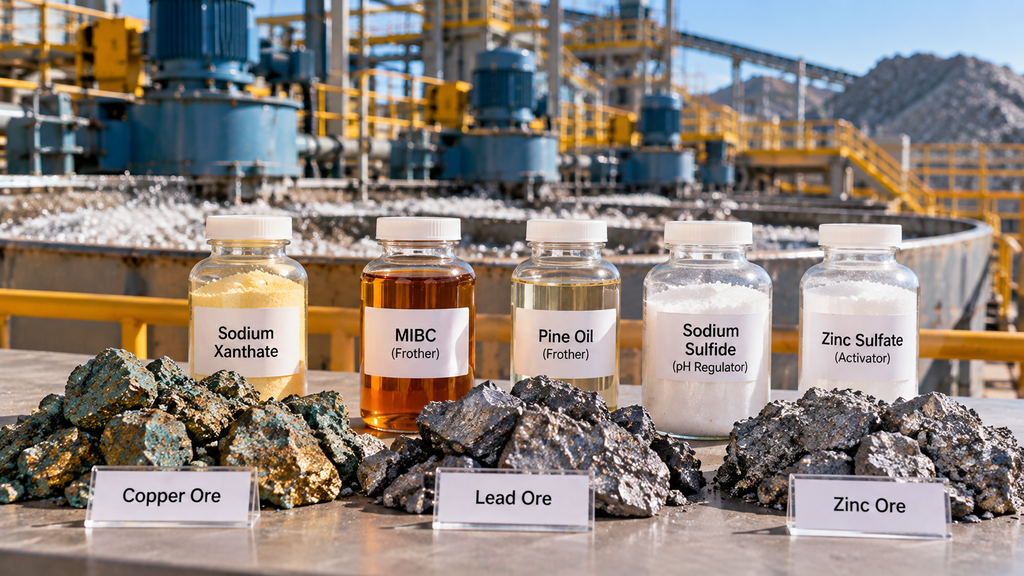
Collectors play a key role in determining which minerals attach to air bubbles and enter the froth phase.
Xanthates
Xanthates are widely used as collectors in the flotation of various sulfide minerals, including copper, lead and zinc sulfide ores.
Different xanthate products have different collecting strengths and selectivity characteristics. Selection should consider the target mineral, ore properties, flotation conditions and the required concentrate grade.
Explore our Xanthate products for sulfide mineral flotation applications.
Sodium Sulfide
Sodium sulfide is used in certain mineral processing operations, including some non-ferrous metal flotation systems. Depending on the ore and process conditions, it may act as a sulfidizing agent or modify mineral surface behavior.
Its effectiveness depends on the mineral system, dosage, pH and other process variables. Laboratory testing is recommended before selecting an operating dosage.
Explore our Sodium Sulfide product for mineral processing applications.
3. How to Choose the Right Flotation Frother
Frothers help control bubble formation, bubble size and froth behavior. These characteristics influence the transport of floated minerals and the stability of the froth layer.
MIBC
Methyl Isobutyl Carbinol (MIBC) is a commonly used frother in mineral flotation. It is often considered when bubble structure, froth mobility and concentrate quality need to be balanced.
Pine Oil
Pine oil-based frothers are also used in certain mineral flotation systems. Their performance depends on composition, dosage, ore characteristics and operating conditions.
How Should You Compare MIBC and Pine Oil?
Neither product is universally better. The most suitable frother depends on the ore and the flotation circuit.
When comparing products, consider:
- Bubble size and distribution
- Froth stability and drainage
- Mineral recovery and concentrate grade
- Reagent consumption
- Compatibility with the existing reagent system
Explore our MIBC and Pine Oil products to identify options for your flotation process.
4. Key Factors Affecting Flotation Reagent Performance
Even a suitable reagent may produce inconsistent results if operating conditions are not properly controlled.
Ore Mineralogy
Copper, lead and zinc ores can contain different sulfide minerals, gangue minerals and naturally occurring impurities. Mineral composition affects reagent selection and separation selectivity.
Particle Size
Grinding must achieve an appropriate liberation size. Particles that are too coarse may not attach effectively to bubbles, while excessive grinding can generate fine particles that complicate flotation.
Pulp pH
Pulp pH affects mineral surface chemistry and reagent behavior. The optimum pH depends on the ore and the separation strategy.
Water Quality
Dissolved ions, hardness and recycled process water can influence reagent performance. Water quality should be considered when troubleshooting changes in flotation results.
Reagent Dosage and Addition Sequence
Excessive reagent dosage does not necessarily improve recovery. It may increase operating costs or reduce selectivity. Addition points, conditioning time and dosage should be evaluated through controlled testing.
5. How to Improve Flotation Efficiency
For mineral processing plants seeking more consistent results, the following steps provide a practical starting point:
- Characterize the ore and identify the target minerals.
- Review current flotation performance, including recovery and concentrate grade.
- Evaluate collector and frother options separately before testing combinations.
- Conduct laboratory flotation tests to compare reagent dosage and operating conditions.
- Validate promising results through plant trials and monitor reagent consumption.
Reagent selection should be based on measurable process results rather than product price alone. A lower-cost reagent may not provide the lowest overall operating cost if it requires higher consumption or reduces mineral recovery.
6. How Hanhai Chemical Can Support Your Reagent Sourcing
Selecting flotation reagents requires consideration of both technical suitability and reliable supply.
Hanhai Chemical supplies chemical products for industrial applications, including mineral processing. We can discuss your target minerals, current reagent requirements, preferred specifications and packaging needs to help identify potentially suitable products.
When making an inquiry, please provide the following information where available:
- Target mineral: copper, lead, zinc or a polymetallic ore
- Current flotation reagent and grade requirements
- Required product specifications
- Estimated monthly or annual consumption
- Destination country and preferred packaging
These details help establish a clearer basis for product selection and quotation.
Contact Hanhai Chemical to discuss your flotation reagent requirements and explore suitable chemical supply options.
Conclusion
Choosing flotation reagents for copper, lead and zinc ores requires a balanced understanding of mineralogy, reagent function and operating conditions.
Collectors, frothers and modifiers each contribute to the separation process. By evaluating product compatibility, dosage and flotation results through systematic testing, mineral processing plants can make more informed reagent selection decisions.
Hanhai Chemical welcomes inquiries from mining companies, mineral processing plants and chemical distributors seeking flotation reagent supply solut
Looking for Flotation Reagents?
Explore our xanthate collectors for mineral processing.